

Posted In News
Meter Seals: A Practical Guide to the Most Common Types and Their Applications
Why this guide matters:
For electricity, gas and water providers, meter seals are the first line of defence against unauthorised access. They provide visible, tamper-evident protection and support compliance.
Choosing the right seal and managing its serial numbering improves operational integrity across the network. Harcor, Australia’s first dedicated security seal supplier, carries an abundant range of meter seals, wires and presses matched to utility requirements; contact us for help with any meter sealing or broader utility sealing application.

What meter seals do (and why selection matters)
Meter seals deter and reveal tampering on meter enclosures, switchboards, valves and associated equipment. The correct security seal balances ease of installation, durability in local conditions, compatibility (example, with specific presses or wires), and the level of deterrence needed for regulatory or contractual compliance. Harcor’s utility-focused collections and guidance outline the best compatible combinations (seal + wire + press).
The most common meter seals (and when to use them)
1) Tool-Less Roto Meter Seal (SCEC approved)
A classic, high security, tool less wire seal made from durable acrylic, designed for fast application without specialised tools. Features include unique sequential numbering, a large flag, and a laser etched insert that matches the last three digits of the serial number, enhancing traceability. The Tool Less Roto Seal is SCEC approved, reaffirming its suitability for government and sensitive commercial deployments. Typical uses include sealing cabinets, meters, speedometers, switchboards and valves.
This meter seal is compatible with our Stainless Steel Wire Roll (YO13900), which can be cut to the required length. For added convenience, pre-cut wire designed for the Tool-Less Roto Seal (YO13840) is also available.
Why utilities pick it: Up to date SCEC approval confirms robustness and reliability; Harcor’s SCEC approval announcement blog includes a diagram demonstrating the simple, repeatable twist to lock application steps for consistent field practice.
2) Tool-Less Meter Seal with Sealing Wire
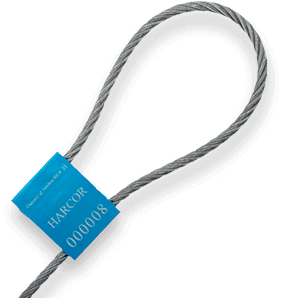
A single component utility seal supplied with pre attached stainless steel wire (nylon coated), streamlining installation. Features include unique sequential serial numbering, convenient 5 unit mats, and a large, easy to read flag. Common applications: meters, fuel tanks, petrol pumps, drums and scales, where quick deployment and tamper evidence are essential.

Time saving advantage: Having the sealing wire attached to a meter seal is a real time saver, this is certainly highly recommended on work that requires high frequency use security sealing applications.
Serial number management is often overlooked—until it’s needed to prove custody, uniqueness and responsibility. Harcor highlights that each seal’s unique serial number must be trackable to your organisation; if a dispute occurs, documentation showing that the number was issued only to you is crucial. Harcor’s Exact & Track system (developed with Exact Software and conforming to NEN EN ISO 9001:2015) prevents duplication and provides verifiable records for audits and investigations.
3) Harcor Energy Seal (press crimp slim tail seal)
This slim tail meter seal is designed to be crimped using the Harcor Sealing Press. Its narrow tail suits enclosure boxes, time switches, electricity meters, circuit breakers and safety switches—making it a modern alternative to traditional lead seals. They are supplied in mats of 20 for efficient handling, and optional custom character marking can be added via the Hacor Sealing Press.

4) Harmet Meter Seal + Harmet Tail (press crimp sealing system)
The Harmet Meter Seal is a robust, easy to apply polypropylene seal used with wire or the Harmet Tail, then crimped using the Harcor Sealing Press. It’s widely adopted as a compact substitute for lead seals, with embossed dies available for identification and added security. The Harmet Tail is specifically engineered to simplify insertion and achieve a secure crimp in place of lead.

5) Metal Ferrule Seal (press crimp metal seal)
A copper/tin metal ferrule (12 mm long × 4 mm diameter) that’s crimped with the Harcor Sealing Press using tongue and groove dies. It pairs with pre cut stainless steel wire (100 mm or 150 mm lengths) for reliable tamper evidence in harsh environments. This is a familiar choice where a compact metal seal body and metal wire are preferred for durability and inspection clarity.
The Harcor Sealing Press: compatible seals and field workflow
Harcor’s Stainless Steel Meter Seal Press is purpose-built for utility sealing applications. The press features interchangeable dies and can be used with either blank or engraved male or female dies, which are easily swapped using the supplied Allen key.
This press is compatible with Harcor Energy Seals, Harmet Meter Seals, and Metal Ferrule Seals, standardising tool use across multiple meter security seal types. It also supports engraved dies to identify the sealing authority, such as technician IDs or business initials.
Note: Engraved dies are available and typically require a lead time. Dies can be engraved with up to four characters per line. The standard engraving option is a die with centreline male engraving and can be ordered directly through the website. Please contact us directly for any other special requirements such as multiple line and/or female engraving.

Selecting the Right Meter Seal Identification and Compliance Path
Serial numbering is often a critical decision-making requirement. When used, serialised seals can be issued and audited in line with specific work requirements, supporting clear accountability. Utility sector applications consistently highlight the value of professionally managed numbering and how Harcor’s controls provide confidence for metering operations. The tool-less meter seal range incorporates serial numbering as standard.
It is also important to recognise that not all applications use serial numbering. Some customers use a sealing press and die system to permanently mark seals with a unique identifier, such as a technician ID or business initials. In these cases, the objective is not to track individual seal numbers, but to clearly identify who carried out the sealing task. This approach is well suited to workflows where accountability is established through the die marking itself, and the additional controls associated with serial number management are not required. For these users, a professional sealing press with interchangeable engraved dies provides a simple, consistent and reliable method of identification in the field.
SCEC approval indicates a design has met Australian protective security criteria. Harcor confirms its Tool Less Roto Seal achieved up to date SCEC approval, making it suitable for government and other sensitive applications; the company’s guidance page for sealing meters also notes SCEC approvals for the standard Roto Seal and Tool Less variant—useful when specifying seals for projects that mandate SCEC listed solutions.
Harcor: extensive options, local expertise and support
Harcor’s Meter Seals, Wire & Presses collection spans tool-less wire seals, slim tail press crimp options, miniature Harmet systems, metal ferrules, and the full set of pre cut wires plus the Security Seal Press and engraving services. As a major supplier to utilities across Australia since 1969, Harcor backs product choice with specialised specification advice. Please contact us for help with any meter sealing or other utility sealing application recommendations.